Medical autoclaves are among the most important pieces of equipment in healthcare, dental, veterinary, laboratory, and research facilities. They work tirelessly to eliminate harmful microorganisms and ensure instruments are safe for reuse. However, like any machine that operates under high temperatures and pressure, autoclave components naturally wear over time.
Ignoring early warning signs can lead to failed sterilisation cycles, costly downtime, and even compliance issues. Knowing when your autoclave parts need repair or replacement helps maintain reliable performance, extends the life of your equipment, and protects patient safety.
In this guide, we’ll cover the most common signs of failing autoclave parts, which components are most likely to wear out, and when it’s time to call a qualified technician.
Why Healthy Autoclave Parts Matter
Every component inside an autoclave plays an important role in producing safe, effective sterilisation cycles. Even a small fault can affect chamber pressure, steam quality, drying performance, or temperature accuracy.
Regular inspections and preventive maintenance help you:
- Maintain consistent sterilisation performance
- Reduce unexpected equipment failures
- Minimise repair costs
- Extend equipment lifespan
- Meet Australian healthcare compliance standards
- Protect patients and staff
If you’re unsure how each component works, read our guide on Autoclave Parts Explained: A Complete Guide to Every Essential Component.
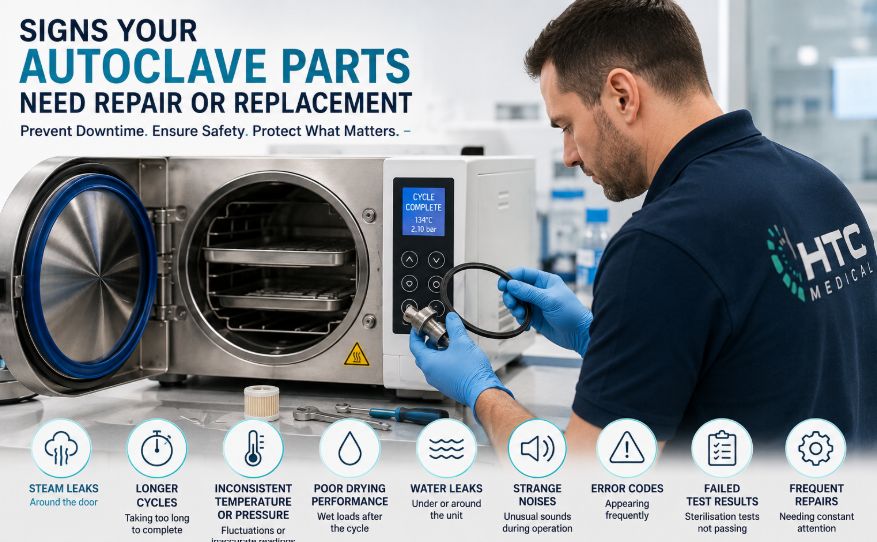
1. Steam Leaks Around the Door
One of the first signs of a worn component is steam escaping around the door during operation.
This often indicates:
- Damaged door gasket
- Misaligned door
- Worn locking mechanism
- Faulty door seal
A damaged gasket prevents the chamber from maintaining the correct pressure, resulting in incomplete sterilisation cycles.
Don’t ignore:
- Hissing sounds
- Steam escaping during operation
- Water around the door
- Longer sterilisation cycles
Replacing the door seal early is usually much less expensive than repairing damage caused by prolonged leaks.
2. Longer Sterilisation Cycles
If your autoclave suddenly takes much longer to complete cycles, worn internal parts could be affecting efficiency.
Possible causes include:
- Blocked filters
- Faulty heating element
- Steam generator problems
- Vacuum pump wear
- Pressure sensor issues
Longer cycles often indicate the machine is struggling to reach the required sterilisation temperature or pressure.
3. Inconsistent Temperature or Pressure
Autoclaves rely on precise temperature and pressure control.
If readings fluctuate or fail to reach the programmed settings, several components may need attention.
Common culprits include:
- Temperature sensors
- Pressure sensors
- Safety valves
- Heating elements
- Control boards
Incorrect temperature readings can compromise sterilisation effectiveness, making regular calibration and servicing essential.
4. Poor Drying Performance
If instruments remain wet after a completed cycle, something isn’t functioning correctly.
Possible worn parts include:
- Vacuum pump
- Air filter
- Drain system
- Door seal
- Drying fan (where applicable)
Wet instruments are more susceptible to contamination after sterilisation and may require reprocessing.
5. Water Leaks Under the Machine
Water pooling beneath your autoclave should never be ignored.
Potential causes include:
- Cracked hoses
- Worn fittings
- Faulty drain valve
- Damaged water pump
- Loose connections
Even minor leaks can damage internal electronics and lead to more expensive repairs if left unresolved.
6. Strange Noises During Operation
An autoclave should operate smoothly with predictable sounds.
Unusual noises may indicate:
- Vacuum pump wear
- Failing bearings
- Loose internal components
- Valve malfunction
- Water pump problems
Grinding, knocking, or excessive vibration usually requires professional inspection.
7. Error Codes Appear Frequently
Modern autoclaves continuously monitor internal systems.
Repeated error codes often point to failing components such as:
- Sensors
- Solenoid valves
- Heating elements
- Electronic control boards
- Pressure switches
Rather than resetting the machine repeatedly, it’s best to diagnose the underlying issue.
8. Failed Sterilisation Tests
Routine biological indicators and chemical indicators verify sterilisation performance.
Repeated failures may indicate problems with:
- Steam generation
- Chamber pressure
- Temperature sensors
- Door seals
- Safety valves
Failed validation tests should always be investigated immediately.
For facilities requiring compliance testing, learn more about our Autoclave Validation Services.
9. Rust or Chamber Damage
The chamber is the heart of every autoclave.
Watch for:
- Rust
- Pitting
- Corrosion
- Surface damage
- Mineral build-up
These issues can reduce efficiency and eventually compromise the chamber’s structural integrity.
Regular cleaning and proper water quality significantly extend chamber life.
10. The Machine Requires Frequent Repairs
If you’re repeatedly replacing parts or scheduling emergency repairs, your autoclave may need a comprehensive service.
Frequent repairs often involve:
- Vacuum pumps
- Heating elements
- Solenoid valves
- Control systems
- Steam generators
An experienced technician can determine whether replacing individual parts or refurbishing the unit is the most cost-effective solution.
Most Common Autoclave Parts That Wear Out
The following components naturally experience wear over time:
- Door gasket
- Heating element
- Vacuum pump
- Water pump
- Steam generator
- Pressure relief valve
- Temperature sensor
- Pressure sensor
- Solenoid valves
- Chamber filter
- Drain valve
- Air filter
- Door locking mechanism
- Control board
- Water level sensor
Routine servicing helps identify worn components before they cause equipment failure.
When Should You Replace Autoclave Parts?
Replacement intervals vary depending on:
- Usage frequency
- Water quality
- Maintenance schedule
- Manufacturer recommendations
- Equipment age
High-volume healthcare facilities may replace wear items much sooner than clinics with lighter workloads.
Following a preventive maintenance schedule is always more economical than waiting for unexpected failures.
Preventive Maintenance Saves Time and Money
Preventive servicing helps detect worn parts before they become major problems.
Benefits include:
- Reduced downtime
- Lower repair costs
- Improved sterilisation reliability
- Longer equipment lifespan
- Better compliance
- Increased workplace safety
Scheduling regular inspections also helps ensure your autoclave continues operating at peak performance.
If your unit is ageing but still structurally sound, our Autoclave Repair & Maintenance Services can restore reliable operation and extend its service life.
Keep Your Autoclave Running at Its Best
Recognising the early signs of worn or failing autoclave parts can prevent costly breakdowns, reduce downtime, and help maintain safe, compliant sterilisation processes. From damaged door seals and faulty sensors to worn pumps and heating elements, addressing issues early ensures your equipment continues to perform reliably while protecting patients, staff, and valuable instruments.
At HTC Medical, we specialise in professional autoclave servicing, repairs, validation, preventive maintenance, and high-quality refurbished autoclaves. Our experienced technicians work with a wide range of leading brands to keep your sterilisation equipment operating at peak performance and compliant with Australian standards.
If you’ve noticed any of the warning signs discussed in this guide, don’t wait for a complete equipment failure. Contact HTC Medical today to schedule an inspection or service, and let our team help maximise the performance, reliability, and lifespan of your autoclave.