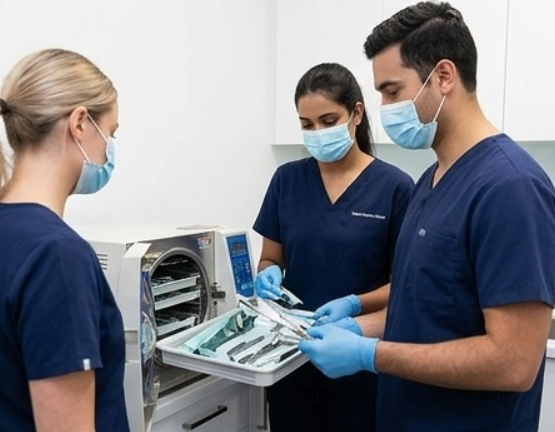
Regular autoclave servicing is essential for medical, dental, veterinary and other healthcare facilities that rely on steam sterilisation every day. A well-maintained autoclave can help reduce unexpected breakdowns, maintain reliable cycle performance and extend the working life of the equipment.
For practices across Sydney, NSW, professional autoclave maintenance should be part of your regular equipment management program. Whether your clinic is located in Sydney CBD, Parramatta, Blacktown, Liverpool, Bankstown, Penrith, Campbelltown, Chatswood, North Sydney, Ryde, Hornsby or the wider Greater Sydney area, keeping your steriliser properly maintained can help minimise disruption to your daily operations.
At HTC Medical, we provide autoclave servicing, repair and validation across Sydney and NSW, supporting medical centres, dental practices, specialist clinics, veterinary clinics, day surgeries and other healthcare facilities.
Why Is Regular Autoclave Servicing Important?
An autoclave operates using high temperature, pressure and controlled steam conditions. Like any piece of equipment used regularly, components can wear down over time and performance can be affected by poor maintenance, water quality, contamination or mechanical faults.
Regular servicing allows potential problems to be identified before they develop into major failures.
Professional autoclave servicing can help:
- Maintain reliable sterilisation performance
- Identify worn or damaged components
- Reduce unexpected equipment breakdowns
- Minimise failed sterilisation cycles
- Improve equipment reliability
- Extend the useful life of your autoclave
- Reduce unnecessary downtime
- Support your overall sterilisation and infection-control procedures
For a busy dental practice in Parramatta or Chatswood, a medical centre in Liverpool or Bankstown, or a specialist clinic in Sydney CBD, an autoclave failure can affect appointments and daily operations.
Preventive maintenance can help you identify problems before they result in an unexpected breakdown.
For a detailed overview of professional servicing and repairs, see our Autoclave Repair and Maintenance Services in NSW.
How Often Should an Autoclave Be Serviced in Sydney?
There is no single servicing interval that applies to every autoclave. The appropriate maintenance schedule depends on the manufacturer, model, age, workload, operating environment and frequency of use.
A high-volume dental practice using an autoclave several times a day may require more attention than a facility using its steriliser less frequently.
Your maintenance schedule should consider:
- Manufacturer recommendations
- Autoclave model and age
- Number of sterilisation cycles
- Frequency of daily use
- Previous repairs
- Condition of the machine
- Results of previous testing and validation
- Operating environment and water quality
It is also important to distinguish servicing from validation. Servicing focuses on maintaining the equipment, while validation involves testing and documenting sterilisation performance.
HTC Medical’s Autoclave Validation Services can be combined with servicing where appropriate, helping reduce downtime and avoid having to arrange separate visits.
What Is Included in Professional Autoclave Servicing?
The exact maintenance procedure depends on the autoclave brand and model. However, a professional service generally involves inspection, cleaning, testing and assessment of critical components.
Door Seal and Gasket Inspection
The door seal plays an important role in maintaining the chamber’s pressure during a sterilisation cycle.
A worn, damaged or hardened gasket may allow steam to escape and can contribute to pressure problems or failed cycles.
Regular inspection can identify deterioration before it becomes a larger problem.
Chamber Inspection and Cleaning
The sterilisation chamber should be inspected for contamination, deposits, corrosion and other issues that could affect the equipment.
Keeping the chamber clean is an important part of maintaining reliable autoclave performance.
Water System and Drainage
Water quality can have a significant impact on an autoclave.
Poor-quality water can contribute to mineral deposits and contamination, potentially affecting components and equipment performance.
The water supply, drainage system and related components should be checked according to the requirements of the specific autoclave.
Filters and Consumable Components
Filters can become blocked or contaminated during normal use.
Depending on the machine, servicing may involve inspecting or replacing filters and other consumable components according to manufacturer recommendations.
Valves, Sensors and Heating Components
Important components such as valves, sensors, heating elements and vacuum systems should be inspected for signs of wear or abnormal operation.
A problem with one of these components can affect temperature, pressure, steam penetration or drying performance.
Cycle Testing
The autoclave should be operated and assessed to identify unusual behaviour, alarms, error messages or performance issues.
If faults are detected, further autoclave repair and maintenance may be required.
Autoclave Servicing vs Autoclave Validation
One of the most common questions from healthcare practices is whether servicing and validation are the same thing.
They are not.
Autoclave servicing involves maintaining, inspecting and repairing the equipment so it continues to operate correctly.
Autoclave validation involves testing the sterilisation process to verify that the equipment is performing as intended and meeting the applicable requirements.
Both can play an important role in maintaining reliable sterilisation equipment.
For practices in Sydney and throughout NSW, HTC Medical can combine servicing and validation where appropriate. Learn more about our autoclave validation services across NSW.
Signs Your Autoclave Needs Servicing
You should not necessarily wait for your autoclave to completely stop working before arranging maintenance.
Watch for warning signs such as:
- Longer cycle times
- Frequent cycle failures
- Recurring error messages
- Unusual noises
- Water leaks
- Steam escaping around the door
- Wet instruments or sterilisation pouches
- Difficulty closing the chamber door
- Pressure fluctuations
- Temperature inconsistencies
- Repeated alarms
- Poor drying performance
- Visible corrosion or deposits
If you notice any of these problems, continuing to operate the machine without investigating the cause may lead to more serious equipment issues.
For recurring faults, HTC Medical’s autoclave repair and maintenance service can help diagnose the problem and determine whether repair, servicing or further testing is required.
Why Are Autoclave Pouches Wet After a Cycle?
Wet packs are a common concern for dental and medical practices.
There can be several possible causes, including incorrect loading, overloading, inadequate drying, drainage problems, water-quality issues or mechanical faults.
The problem should not automatically be attributed to the autoclave itself. Loading procedures, packaging, cycle selection and instrument preparation can all affect drying performance.
However, if wet loads continue after correct operating procedures have been followed, the equipment should be inspected.
This is particularly important for high-volume practices in Sydney CBD, Parramatta, Blacktown, Liverpool, Bankstown, Penrith and Western Sydney, where an ongoing sterilisation problem can quickly disrupt normal operations.
Autoclave Servicing for Dental Clinics in Sydney
Dental practices depend heavily on reliable benchtop autoclaves to process reusable instruments.
A poorly maintained steriliser can create unnecessary delays and potentially interrupt patient appointments.
Dental clinics throughout Sydney, Parramatta, Chatswood, North Sydney, Ryde, Liverpool, Bankstown, Blacktown and Western Sydney should maintain a regular servicing schedule based on their equipment and workload.
If you operate a dental practice, our guide to Dental Autoclaves: A Complete Guide for Dental Practices provides additional information about autoclave selection, maintenance and validation.
Regular servicing can help identify issues with door seals, filters, pumps, heating components, sensors and other critical parts before they develop into major failures.
Autoclave Servicing for Medical Centres Across NSW
Autoclaves are also used in medical centres, specialist clinics, day surgeries and other healthcare facilities.
HTC Medical services a wide range of healthcare environments across Sydney and NSW, including:
- Medical centres
- Dental surgeries
- Specialist clinics
- Hospitals
- Day surgeries
- Veterinary clinics
- Beauty and cosmetic clinics
This includes facilities in Sydney CBD, Parramatta, Liverpool, Blacktown, Penrith, Campbelltown, Fairfield, Bankstown, Auburn, Castle Hill, Hornsby, Chatswood, North Sydney, Ryde, Miranda and the Sutherland Shire, as well as surrounding areas.
You can see the different types of facilities supported through our medical and healthcare facility services page.
Maintaining Different Autoclave Brands
Different manufacturers use different components, control systems and maintenance procedures. This is why servicing should be carried out by technicians who understand the equipment being maintained.
HTC Medical works with leading autoclave brands including:
- MELAG
- Mocom
- Hatmed
- Aura
- Other professional sterilisation equipment
Our experience covers maintenance, repair and validation for a wide range of benchtop sterilisers used by healthcare facilities throughout Sydney and NSW.
Should You Repair or Replace Your Autoclave?
An ageing autoclave does not automatically need to be replaced.
In many cases, a professional inspection can determine whether the issue is caused by a worn component that can be repaired or replaced.
Repair may be suitable when:
- The autoclave is otherwise in good condition
- Replacement parts are available
- The repair is economically practical
- The machine remains suitable for the practice’s workload
- The equipment can continue operating reliably after repair
Replacement may be worth considering when:
- The autoclave has repeated major failures
- Parts are difficult or impossible to source
- Repair costs are becoming excessive
- The machine is outdated
- The equipment no longer meets your operational requirements
- The practice has outgrown the existing chamber capacity
If replacement makes more sense, HTC Medical also supplies new and refurbished autoclaves for sale.
For practices looking for a more cost-effective replacement option, our refurbished autoclaves are professionally restored, tested and validated before sale.
Choosing an Autoclave Service Provider in Sydney
Choosing the right service provider is just as important as choosing the right autoclave.
When comparing autoclave service providers in Sydney, consider:
- Experience with your specific autoclave brand
- Knowledge of sterilisation equipment
- Availability of genuine or appropriate replacement parts
- Repair capabilities
- Validation services
- Maintenance contracts
- Service documentation
- On-site servicing capabilities
- Experience with medical and dental facilities
A local service provider can also make it easier to arrange maintenance, repairs and validation without unnecessary equipment downtime.
For Sydney practices, HTC Medical operates from Padstow, NSW, with service support extending across Greater Sydney and other areas of NSW.
Autoclave Servicing Across Sydney and NSW
HTC Medical provides autoclave servicing, repair and validation for healthcare facilities across Sydney and New South Wales.
Our service coverage includes Sydney CBD, Eastern Suburbs, Western Sydney, South Sydney, North Sydney, Northern Beaches, Hills District, Sutherland Shire and surrounding metropolitan areas, as well as regional NSW.
We also support facilities in locations such as Wollongong, Newcastle and other NSW areas, depending on service requirements and availability.
Whether you operate a dental practice in Parramatta, a medical centre in Liverpool, a specialist clinic in Chatswood, a veterinary facility in Penrith, or a healthcare business elsewhere in NSW, maintaining your autoclave should be part of your regular equipment management plan.
Keep Your Autoclave Performing Reliably
Regular autoclave servicing can help identify problems before they turn into unexpected equipment failures.
Issues such as worn door seals, blocked filters, water-quality problems, faulty sensors and vacuum-system problems can affect equipment performance if they are left unaddressed.
For medical and dental practices across Sydney and NSW, proactive maintenance can help reduce downtime, support reliable sterilisation performance and extend the useful life of your autoclave.
If your autoclave is due for maintenance, showing warning signs or experiencing recurring cycle problems, contact HTC Medical to discuss professional autoclave servicing, repair and validation across Sydney and NSW.