An autoclave is one of the most important pieces of equipment in any healthcare, dental, veterinary, or laboratory setting. When used correctly, it provides reliable steam sterilization that helps protect patients, staff, and the wider community from harmful microorganisms.
However, even the most advanced autoclave machine can fail to achieve proper sterilization if it isn’t operated correctly. In many cases, sterilization issues aren’t caused by equipment faults but by simple mistakes during loading, packaging, maintenance, or cycle selection.
The good news is that most of these problems are easy to avoid once you know what to look for.
Below are some of the most common autoclave mistakes healthcare professionals make and practical ways to prevent them.
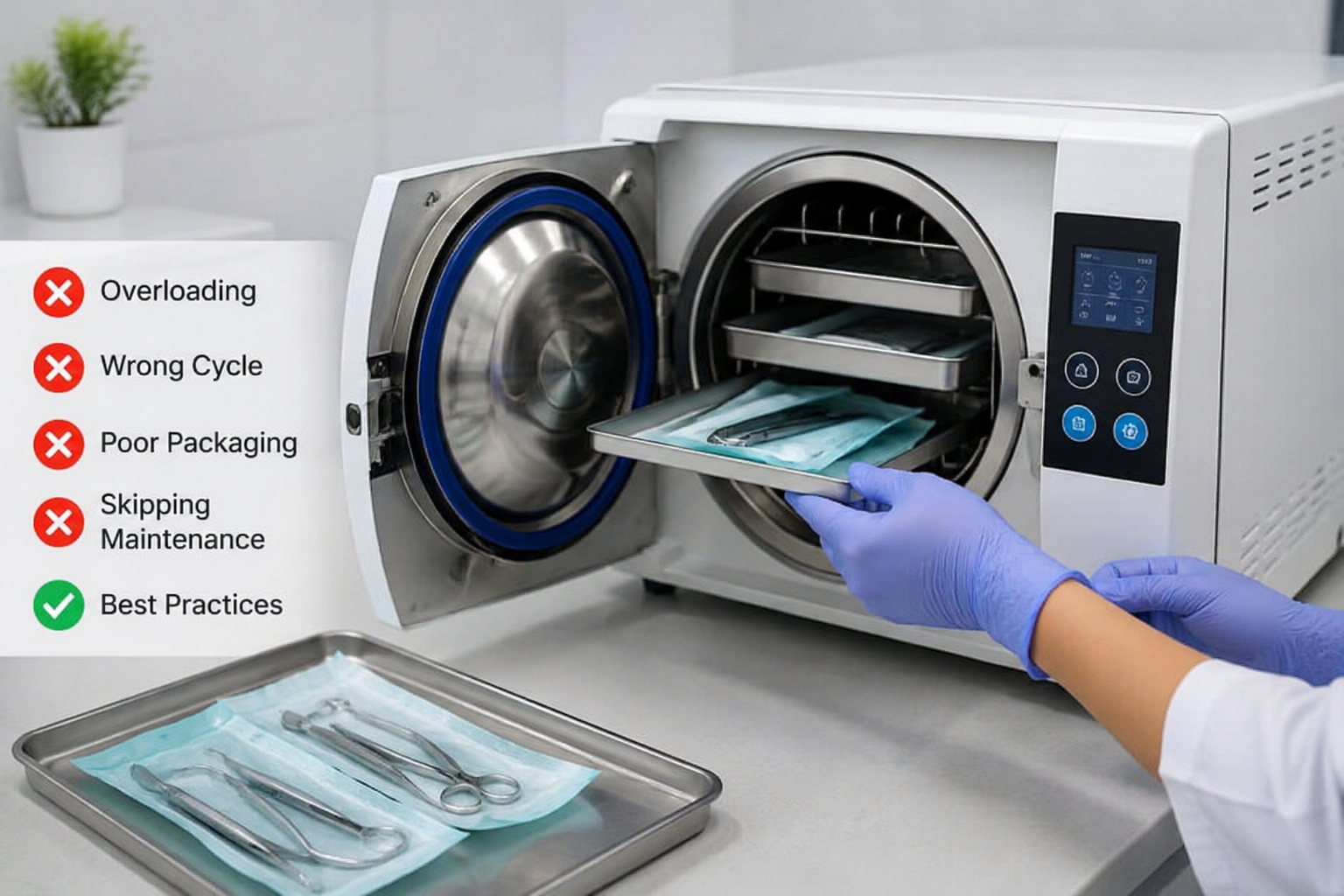
Overloading the Autoclave Chamber
One of the most frequent mistakes is trying to fit too many instruments into a single sterilization cycle.
It’s understandable. Busy clinics and practices often want to maximise efficiency by processing as many instruments as possible at once. Unfortunately, overcrowding the chamber can restrict steam circulation, preventing steam from reaching every surface.
When steam cannot move freely around the load, some instruments may not be sterilized effectively.
How to Avoid It
Always follow the manufacturer’s loading recommendations and avoid stacking instruments too tightly together. Leave adequate space between instrument trays, sterilization pouches, and packs to allow proper steam penetration.
Remember that a slightly smaller load processed correctly is far safer than an overloaded chamber that compromises sterilization performance.
Choosing the Wrong Sterilization Cycle
Modern autoclaves offer multiple sterilization programs designed for different instrument types and load configurations.
Selecting the wrong cycle can result in incomplete sterilization, excess moisture, or damage to instruments.
For example, a cycle suitable for unwrapped instruments may not be appropriate for packaged surgical instruments or hollow dental handpieces.
How to Avoid It
Ensure staff members understand the purpose of each cycle available on the autoclave. Review the manufacturer’s instructions and create clear internal procedures for selecting the correct sterilization program.
Providing regular training can significantly reduce user error and improve sterilization consistency.
Using Damaged or Poor-Quality Sterilization Pouches
Sterilization pouches play a critical role in maintaining instrument sterility after processing.
If a pouch is torn, punctured, improperly sealed, or manufactured from low-quality materials, instrument sterility may be compromised even if the sterilization cycle itself was successful.
How to Avoid It
Inspect pouches before every cycle and only use products specifically designed for steam sterilization. Ensure pouches are sealed correctly and avoid overfilling them with instruments.
A damaged pouch should always be discarded and replaced.
Skipping Routine Autoclave Maintenance
Like any piece of medical equipment, autoclaves require regular servicing and maintenance to operate effectively.
Ignoring maintenance schedules can lead to reduced performance, unexpected breakdowns, longer cycle times, and costly repairs.
Many sterilization failures can be traced back to neglected maintenance rather than equipment defects.
How to Avoid It
Develop a preventive maintenance schedule that includes:
- Daily chamber cleaning
- Regular inspection of door seals
- Checking water quality
- Cleaning trays and filters
- Scheduled servicing by qualified technicians
- Periodic calibration and validation
Routine maintenance not only improves reliability but can also extend the lifespan of your autoclave.
Using Poor Water Quality
Water quality is often overlooked, yet it has a major impact on autoclave performance.
Minerals and contaminants found in untreated water can accumulate inside the sterilizer, leading to scale buildup, blocked components, and reduced efficiency.
Over time, poor water quality may cause costly damage to heating elements and internal systems.
How to Avoid It
Always use the water type recommended by the manufacturer, which is typically distilled, demineralized, or purified water.
Regularly inspect water reservoirs and replace water according to maintenance guidelines.
Failing to Monitor Sterilization Results
Many clinics assume that if the autoclave completes its cycle, sterilization has been successful.
While cycle completion is important, it does not automatically guarantee sterilization effectiveness.
Sterilization monitoring is an essential part of infection control and healthcare compliance.
How to Avoid It
Implement a comprehensive monitoring program that includes:
- Physical monitoring
- Chemical indicators
- Biological indicators
- Cycle documentation
- Sterilization records
Regular testing helps verify that sterilization conditions are consistently being achieved.
Not Allowing Instruments to Dry Properly
Removing instruments too early is another common mistake.
Instruments that remain wet after sterilization are more susceptible to contamination because moisture can attract microorganisms from the surrounding environment.
Wet packs can also create storage and compliance issues.
How to Avoid It
Allow the drying phase to complete fully before opening the autoclave door. Avoid rushing the process, even during busy periods.
Proper drying helps maintain sterility and improves instrument storage life.
Neglecting Staff Training
Even the most sophisticated sterilization equipment depends on proper operation.
New employees, temporary staff, and team members who rarely use the autoclave may unknowingly develop poor habits or skip important steps.
How to Avoid It
Provide ongoing training covering:
- Instrument preparation
- Correct loading techniques
- Cycle selection
- Sterilization monitoring
- Maintenance procedures
- Infection control protocols
Regular refresher training helps ensure consistent sterilization practices across the entire team.
Ignoring Manufacturer Guidelines
Different autoclaves have different operating requirements.
What works for one machine may not be appropriate for another.
Ignoring manufacturer recommendations can reduce sterilization effectiveness and may even void equipment warranties.
How to Avoid It
Keep operating manuals accessible and ensure all staff are familiar with the manufacturer’s instructions.
Following recommended procedures helps maximize performance and minimise operational risks.
Why Proper Autoclave Practices Matter
Sterilization is far more than a routine task. It is a critical component of patient safety, infection prevention, and healthcare quality assurance.
Small mistakes can lead to failed sterilization cycles, instrument contamination, compliance issues, and costly downtime. By understanding common autoclave errors and implementing best practices, healthcare facilities can improve efficiency, maintain regulatory compliance, and ensure every instrument is processed correctly.
At HTC Medical, we supply reliable autoclave machines, sterilization equipment, and technical support to healthcare professionals across Australia. Whether you’re looking to upgrade your current sterilizer, improve infection control procedures, or schedule preventative maintenance, our experienced team is here to help.
Contact HTC Medical today to learn more about our autoclave solutions and support services.