Sterilisation is a vital part of infection prevention across healthcare, dental, veterinary, laboratory, and research environments. With several sterilisation methods available, choosing the right one can have a significant impact on patient safety, equipment longevity, and regulatory compliance.
Among all available options, the autoclave steriliser remains the most widely used and trusted solution for reusable medical instruments. However, other sterilisation methods, including dry heat, chemical sterilisation, hydrogen peroxide plasma, and ethylene oxide gas, are also used in specific situations.
So, what’s the difference between an autoclave steriliser and other sterilisation methods? More importantly, which option is right for your facility?
Let’s explore how each method works, along with its advantages, limitations, and ideal applications.
What Is an Autoclave Steriliser?
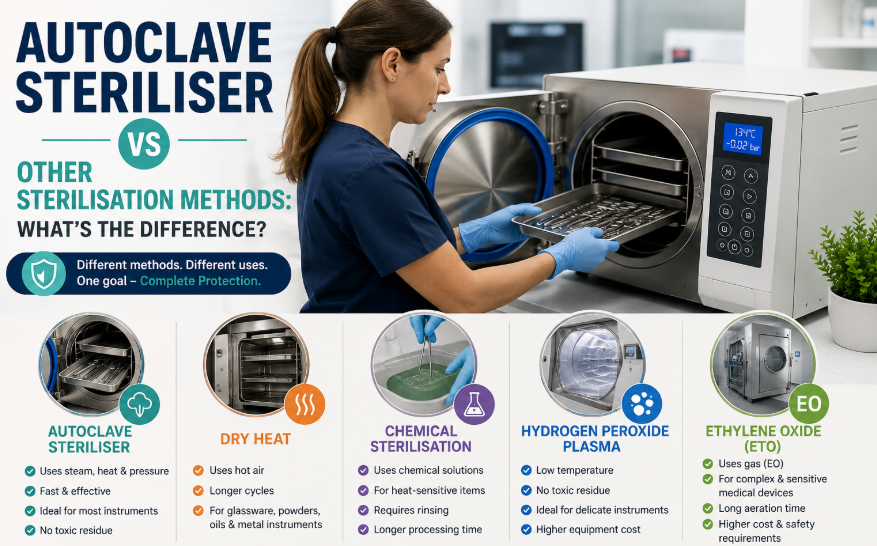
An autoclave steriliser is a machine that uses saturated steam under pressure to destroy bacteria, viruses, fungi, spores, and other harmful microorganisms.
By combining high temperatures with pressurised steam, an autoclave can sterilise surgical instruments, dental tools, laboratory equipment, and other reusable items quickly and effectively.
Steam sterilisation has become the preferred method in most healthcare settings because it’s reliable, environmentally friendly, and leaves no harmful chemical residue.
Common Applications
An autoclave steriliser is commonly used in:
- Hospitals
- Medical clinics
- Dental practices
- Veterinary clinics
- Pathology laboratories
- Research facilities
- Universities
- Pharmaceutical environments
How Does an Autoclave Steriliser Work?
During a sterilisation cycle, air is removed from the chamber before high-temperature steam is introduced.
The combination of heat, moisture, pressure, and exposure time destroys microorganisms by denaturing their proteins and disrupting essential cellular functions.
Once the cycle is complete, many modern autoclave sterilisers include a drying phase to remove moisture before instruments are ready for storage or use.
Because the process is fast, consistent, and highly effective, steam sterilisation is considered the gold standard for reusable instruments.
Other Common Sterilisation Methods
While an autoclave steriliser is suitable for many applications, some materials require alternative sterilisation techniques.
Dry Heat Sterilisation
Dry heat sterilisation uses hot air rather than steam to destroy microorganisms.
It is commonly used for instruments that may corrode when exposed to moisture, such as certain metal tools, powders, oils, and glassware.
Advantages
- No moisture exposure
- Suitable for specific heat-resistant materials
- Simple operating process
Limitations
- Longer sterilisation cycles
- Higher operating temperatures
- Less efficient heat transfer than steam
For most healthcare instruments, steam sterilisation remains the faster and more effective option.
Chemical Sterilisation
Chemical sterilisation uses liquid disinfectants to sterilise instruments that cannot tolerate high temperatures.
Common chemicals include glutaraldehyde and peracetic acid.
Advantages
- Suitable for some heat-sensitive equipment
- Effective when used correctly
Limitations
- Longer processing times
- Chemical handling requirements
- Potential health and environmental concerns
- Thorough rinsing may be required
Because of these factors, chemical sterilisation is generally reserved for specialised equipment.
Hydrogen Peroxide Plasma Sterilisation
Hydrogen peroxide plasma sterilisation is commonly used for delicate medical devices that cannot withstand steam or high temperatures.
This technology converts hydrogen peroxide into a plasma state to eliminate microorganisms.
Advantages
- Low-temperature process
- No toxic residue
- Short cycle times
Limitations
- Higher equipment costs
- Limited compatibility with some materials
- Smaller chamber capacities
It is often used for advanced surgical instruments and specialised medical equipment.
Ethylene Oxide (EtO) Sterilisation
Ethylene oxide gas is designed for highly sensitive medical devices that cannot tolerate heat or moisture.
It penetrates complex instruments and packaging extremely well.
Advantages
- Excellent material compatibility
- Suitable for complex medical devices
- Effective for packaged equipment
Limitations
- Long processing times
- Extensive aeration required
- Higher operating costs
- Strict safety requirements
Due to its complexity, EtO sterilisation is typically limited to specialised healthcare and manufacturing environments.
Comparing Sterilisation Methods
| Method | Best For | Speed | Chemical-Free | Running Costs |
|---|---|---|---|---|
| Autoclave steriliser | Most reusable medical and dental instruments | Fast | Yes | Low |
| Dry heat | Glassware, powders, oils | Slow | Yes | Moderate |
| Chemical sterilisation | Heat-sensitive items | Moderate | No | Moderate |
| Hydrogen peroxide plasma | Delicate medical devices | Fast | Yes | Higher |
| Ethylene oxide | Complex heat-sensitive equipment | Slow | No | High |
For most healthcare providers, an autoclave steriliser offers the best combination of speed, reliability, safety, and cost-effectiveness.
Why Steam Sterilisation Remains the Preferred Choice
Healthcare professionals continue to rely on autoclave sterilisers because they deliver consistent and repeatable sterilisation results.
Key benefits include:
- Highly effective against bacteria, viruses, fungi, and spores
- Faster processing than many alternative methods
- No toxic chemical residue
- Lower operating costs
- Suitable for high-volume sterilisation
- Environmentally friendly
- Widely accepted across healthcare industries
These advantages make steam sterilisers the preferred solution for most Australian healthcare facilities.
Choosing the Right Sterilisation Method
The most suitable sterilisation method depends on several factors, including:
- Type of instruments
- Material compatibility
- Daily workload
- Regulatory requirements
- Turnaround times
- Budget
- Available space
For the majority of reusable surgical and dental instruments, an autoclave steriliser remains the safest and most practical investment.
Heat-sensitive equipment, however, may require alternative low-temperature sterilisation methods.
Keep Your Autoclave Steriliser Performing at Its Best
Even the best sterilisation equipment requires ongoing care to deliver reliable results.
Routine autoclave servicing, calibration, preventative maintenance, and validation help ensure your steriliser continues operating efficiently and remains compliant with Australian standards.
Regular maintenance also helps reduce unexpected breakdowns, improve equipment lifespan, and support consistent sterilisation performance.
Find the Right Autoclave Steriliser with HTC Medical
Choosing the right sterilisation solution is essential for maintaining patient safety, protecting valuable instruments, and meeting compliance requirements.
At HTC Medical, we supply high-quality new and refurbished autoclave sterilisers for healthcare facilities, dental practices, veterinary clinics, and laboratories across Australia. We also provide professional installation, autoclave validation, servicing, calibration, preventative maintenance, and repair services to keep your sterilisation equipment operating at its best.
If you’re looking for reliable autoclave sterilisers or expert support for your existing equipment, contact HTC Medical today. Our experienced team is ready to help you choose the right solution for your facility.