Buying a second hand autoclave can be a practical way for a dental practice, medical clinic, veterinary facility, laboratory, or other healthcare business to access reliable sterilisation equipment without the cost of purchasing a brand-new machine.
However, not every used autoclave is the same. The machine’s age, service history, condition, previous use, available spare parts, validation status, and after-sales support can all affect whether you’re making a good investment.
A professionally refurbished autoclave can offer excellent value, but it’s important to know what to check before you buy. This guide explains what to look for when buying a second hand autoclave in Australia and how to choose a machine that is suitable for your practice.
What Is a Second Hand Autoclave?
A second hand autoclave is a previously owned steriliser that is being sold to another user. It may have been used regularly in a clinic, purchased as a backup machine, or replaced as part of a practice upgrade.
It’s important to distinguish between a used autoclave and a professionally refurbished autoclave.
A used machine may simply be resold in its existing condition. A refurbished autoclave, on the other hand, should go through a structured inspection, servicing, replacement of worn components, testing, and performance verification before being offered for sale.
For buyers, this difference can have a major impact on reliability and long-term value.
Why Buy a Second Hand Autoclave?
The biggest reason businesses consider second hand autoclaves is cost.
A professionally refurbished unit can provide access to established brands and proven sterilisation technology at a lower upfront price than purchasing a new machine.
Other potential benefits include:
- Lower initial investment
- Access to premium brands at a more affordable price
- Reduced equipment replacement costs
- Availability of older models with proven performance
- Faster access to equipment when new stock is unavailable
- Potentially lower environmental impact through equipment reuse
However, the lower purchase price should never be the only consideration. A cheap autoclave that requires extensive repairs can become more expensive than a properly refurbished machine.
Used vs Refurbished Autoclaves: What’s the Difference?
This is one of the most important questions to ask before purchasing.
Used Autoclave
A used autoclave may be sold as-is or with limited servicing. The buyer may need to arrange inspection, repairs, calibration, and validation separately.
Refurbished Autoclave
A professionally refurbished autoclave should have undergone a documented process to restore its performance and reliability.
For example, HTC Medical states that its refurbished autoclaves undergo internal inspection, replacement of wear components, performance testing, and validation before sale.
When comparing machines, ask exactly what “refurbished” means and what work has actually been completed.
What Should You Check Before Buying a Second Hand Autoclave?
Before purchasing a second hand autoclave in Australia, look beyond the external appearance of the machine.
1. Check the Autoclave’s Age
Find out when the autoclave was manufactured and how long it has been in service.
An older machine isn’t automatically a bad investment, but you should consider:
- Previous usage
- Number of cycles
- Availability of replacement parts
- Manufacturer support
- Previous maintenance
- Expected remaining lifespan
A newer machine with poor maintenance may be a worse investment than an older machine that has been professionally maintained.
2. Ask for the Service History
A reliable seller should be able to explain how the machine has been maintained.
Ask for information about:
- Previous servicing
- Repairs
- Parts replaced
- Calibration
- Validation
- Major faults
- Previous operating environment
A clear service history gives you a much better understanding of the machine’s condition.
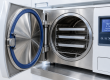
3. Inspect the Chamber
The autoclave chamber is one of the most important components to inspect.
Look for signs of:
- Corrosion
- Pitting
- Excessive mineral deposits
- Physical damage
- Discolouration
- Unusual wear
The chamber should be inspected by a qualified technician rather than judged solely by appearance.
4. Check the Door Seal and Locking System
Door gaskets and seals are wear components that can deteriorate over time.
Look for:
- Cracks
- Hardening
- Deformation
- Steam leaks
- Damage around the door
A worn door seal can prevent the chamber from maintaining the conditions required for a successful cycle.
5. Ask About the Vacuum Pump
For autoclaves that use vacuum technology, the vacuum pump is an important component.
A technician should check whether the pump is operating correctly and whether it can achieve the required vacuum performance.
Vacuum problems can affect air removal, steam penetration, drying, and cycle performance.
6. Check Heating and Temperature Control
The heating system needs to operate consistently to achieve the programmed sterilisation conditions.
A professional inspection should assess relevant components such as:
- Heating elements
- Temperature sensors
- Pressure sensors
- Control systems
- Safety devices
Simply turning the machine on and confirming that it heats up isn’t enough to establish that the autoclave is performing correctly.
Does a Second Hand Autoclave Need to Meet Australian Standards?
This is an important consideration when buying used sterilisation equipment.
AS 5369:2023 is Australia’s current standard covering the reprocessing of reusable medical devices and other devices in health and non-health related facilities. It superseded AS/NZS 4187:2014 and AS/NZS 4815:2006.
The standard covers much more than the autoclave itself, including reprocessing, storage, handling, transportation, risk management, documentation, and related processes.
For a second hand autoclave, you should therefore confirm that the machine is suitable for your intended application and can be properly maintained, tested, and validated according to applicable requirements.
If you’re operating in NSW, there are additional requirements to consider. NSW Health states that reusable instruments that penetrate a person’s skin must be sterilised using a steam-under-pressure benchtop autoclave in line with AS 5369:2023.
What About TGA Registration?
TGA requirements should also be considered when purchasing an autoclave in Australia.
NSW Health states that autoclaves used for steam sterilisation of reusable skin penetration instruments should be registered with the Therapeutic Goods Administration.
National infection-control guidance also advises healthcare facilities to ensure applicable reusable medical devices are included on the Australian Register of Therapeutic Goods and that manufacturer reprocessing instructions are available and can be followed.
Before purchasing a second hand autoclave, ask the supplier about the machine’s regulatory status and whether it is suitable for your intended use.
Should a Second Hand Autoclave Be Validated?
Yes, performance verification is an important consideration when purchasing a used or refurbished autoclave.
NSW Health guidance states that a validation program should be performed when an autoclave is installed and at least annually thereafter, with additional validation following significant changes.
This is why you should ask the seller:
- Has the autoclave been validated?
- When was it last validated?
- Is a validation report available?
- Was performance testing completed after refurbishment?
- Can validation be arranged after installation?
Don’t assume that an autoclave is reliable simply because it completes a cycle without displaying an error.
For more information, read our guide on How Refurbished Autoclaves Are Tested Before Sale.
Check the Autoclave’s Cycle Capabilities
Different practices process different types of instruments.
Before purchasing a second hand autoclave, consider whether it can handle the loads your practice needs to sterilise.
Depending on your application, you may need appropriate cycles for:
- Solid instruments
- Hollow instruments
- Wrapped instruments
- Porous loads
- Dental handpieces
- Other compatible medical devices
The Australian infection-control guidelines emphasise following the manufacturer’s instructions for reusable medical devices and their reprocessing.
Choosing a machine based only on chamber size can therefore lead to problems if it doesn’t have the cycle capabilities your practice requires.
Check the Available Spare Parts
A second hand autoclave can be an excellent investment, but only if it can continue to be supported.
Before buying, ask:
- Are genuine spare parts still available?
- Can qualified technicians service the model?
- Are replacement seals and filters available?
- Is manufacturer technical support still available?
- Can the machine be repaired locally?
This is particularly important with older models.
A lower purchase price doesn’t provide much value if a relatively inexpensive component is no longer available and leaves the machine unusable.
Ask About the Warranty
A warranty provides an additional level of protection when purchasing refurbished equipment.
Ask the seller exactly what the warranty covers and how long it lasts.
Check whether it covers:
- Parts
- Labour
- Major components
- Call-out service
- Repairs
- Replacement equipment
Also ask whether servicing must be completed by a specific provider to maintain the warranty.
What Are the Warning Signs of a Bad Used Autoclave?
Be cautious if a seller:
- Cannot provide a service history
- Won’t allow the machine to be inspected
- Cannot explain its previous use
- Has no testing or validation records
- Offers an unusually low price without explanation
- Cannot provide technical support
- Has no replacement parts available
- Doesn’t offer any warranty
- Cannot explain what was done during refurbishment
A professional seller should be transparent about the machine’s condition and history.
How Much Should You Pay for a Second Hand Autoclave?
There isn’t one fixed price for second hand autoclaves in Australia.
The price can vary depending on:
- Brand
- Model
- Chamber capacity
- Age
- Number of cycles
- Condition
- Class/type
- Features
- Service history
- Refurbishment work
- Warranty
- Validation status
- Availability of spare parts
Rather than choosing the cheapest machine available, compare the total value of each option.
A professionally refurbished autoclave with testing, warranty, technical support, and available parts may offer considerably better value than an inexpensive machine sold without support.
New vs Second Hand vs Refurbished Autoclaves
| Option | Initial Cost | Condition | Warranty | Support |
|---|---|---|---|---|
| New | Higher | New | Usually available | Usually strong |
| Second Hand | Lower | Varies | Depends on seller | Depends on seller |
| Refurbished | Mid-range | Professionally restored | Often available | Usually stronger |
The best choice depends on your budget, workload, sterilisation requirements, and how much long-term support you need.
Why Professional Refurbishment Matters
A second hand autoclave should not simply be cleaned and resold.
Professional refurbishment can involve inspecting the chamber, heating system, vacuum system, sensors, valves, seals, filters, and other critical components.
HTC Medical states that its refurbishment process includes a full internal inspection, replacement of wear components, AS 5369 performance testing, and final validation.
This type of process gives buyers greater confidence that the machine has been properly assessed before being returned to service.
Buying a Second Hand Autoclave in NSW
For practices in Sydney and throughout NSW, local technical support can be particularly valuable.
A supplier that can provide delivery, installation, servicing, validation, repairs, and replacement parts can make ownership much easier.
HTC Medical’s refurbished autoclaves offers refurbished autoclaves for medical, dental, veterinary, and podiatry practices, with servicing and support available across Sydney and regional NSW.
Why Choose HTC Medical?
When buying a second hand autoclave, you’re not just buying a machine. You’re investing in equipment that plays an important role in your practice’s sterilisation process.
HTC Medical specialises in autoclave sales, repairs, maintenance, and validation across NSW. The company is an authorised service agent for brands including Mocom and MELAG and has provided medical equipment support since 1991.
HTC Medical’s refurbished autoclaves are inspected, serviced, tested, and validated before sale, with genuine spare parts and warranty support available on its refurbished range.
Whether you’re replacing an ageing steriliser or setting up a new practice, choosing a professionally refurbished machine can provide a balance between quality, reliability, and cost.
Final Checklist Before Buying
Before committing to a second hand autoclave, make sure you can answer “yes” to the following:
- Is the machine suitable for my intended application?
- Do I know its age and previous usage?
- Is there a service history?
- Has the chamber been inspected?
- Have important wear components been checked or replaced?
- Has the machine undergone performance testing?
- Is validation available or able to be completed?
- Is it suitable for applicable Australian requirements?
- Are spare parts available?
- Is technical support available?
- Does it come with a warranty?
- Can the supplier provide ongoing servicing?
If the seller cannot provide clear answers, consider looking elsewhere.
Conclusion
Buying a second hand autoclave in Australia can be a smart way to reduce your initial equipment investment, but the quality of the machine and the support behind it matter more than the price alone.
A professionally refurbished autoclave that has been properly inspected, serviced, tested, and validated can offer significantly more confidence than a used machine sold without documentation or technical support.
For practices in NSW, it’s also important to consider AS 5369:2023, TGA requirements where applicable, validation, maintenance, documentation, and manufacturer instructions when selecting sterilisation equipment.
If you’re looking for a reliable second hand or refurbished autoclave, HTC Medical can help you find an option suited to your practice, workload, and budget.