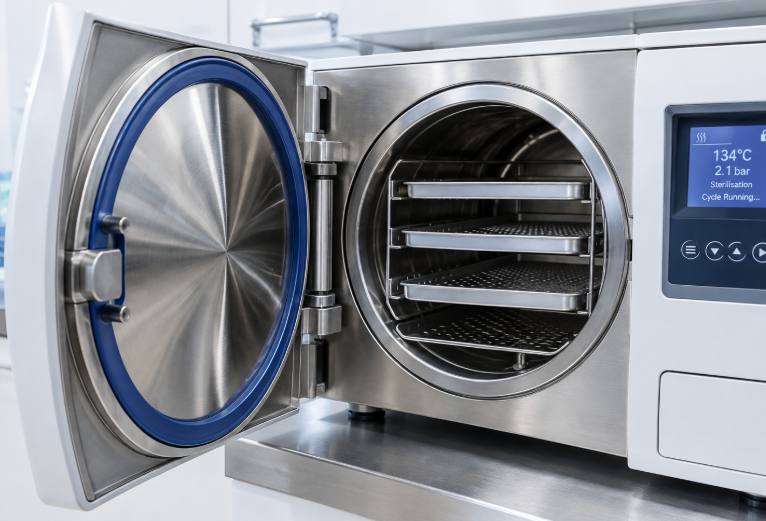
An autoclave is designed to sterilise equipment using high-temperature steam under pressure. It is widely used in dental practices, medical centres, laboratories, veterinary clinics, and other healthcare environments where reusable instruments need to be properly sterilised.
However, not every item can safely go into an autoclave. Materials that cannot withstand high temperatures, pressure, or moisture may become damaged, deformed, contaminated, or unsafe to use.
Knowing what can and cannot be autoclaved helps protect your equipment, maintain effective sterilisation, and prevent unnecessary repairs.
What Can Be Put in an Autoclave?
Items that are suitable for autoclave sterilisation are generally made from materials that can tolerate high temperatures, pressure, and exposure to steam.
1. Stainless Steel Surgical Instruments
Stainless steel instruments are among the most common items sterilised in an autoclave.
Examples include:
- Surgical instruments
- Dental instruments
- Forceps
- Scissors
- Retractors
- Metal trays
- Surgical clamps
- Metal hand instruments
Stainless steel is generally resistant to the heat and moisture used during steam sterilisation, making it suitable for repeated autoclave cycles when the manufacturer’s instructions allow it.
2. Glassware
Certain types of heat-resistant glass can be autoclaved.
Examples include:
- Laboratory glassware
- Glass containers
- Glass bottles
- Some glass syringes
Always check the manufacturer’s instructions before sterilising glass items. Ordinary glass may crack or break when exposed to sudden temperature changes.
3. Heat-Resistant Plastics
Some medical and laboratory plastics are specifically manufactured to withstand autoclave temperatures.
Examples can include certain types of:
- Polypropylene
- PTFE
- PEEK
- Heat-resistant laboratory containers
The important point is that not all plastic is autoclavable. Look for the manufacturer’s autoclave or steam-sterilisation instructions before placing plastic equipment inside the chamber.
4. Certain Rubber and Silicone Products
Some heat-resistant rubber and silicone products can be sterilised using steam.
Examples may include:
- Silicone tubing
- Certain rubber components
- Heat-resistant seals
- Some reusable medical accessories
However, repeated exposure to high temperatures can eventually cause some materials to become brittle, cracked, or degraded.
5. Autoclavable Textiles
Certain reusable medical textiles can be processed in an autoclave when they are specifically designed for steam sterilisation.
These may include:
- Surgical gowns
- Drapes
- Reusable wraps
- Certain cloth materials
Items need to be properly prepared and positioned so that steam can reach all surfaces.
What Cannot Be Put in an Autoclave?
Some materials can be damaged by the combination of high temperature, pressure, and moisture used during an autoclave cycle.
1. Ordinary Plastics
Many common plastics can melt, warp, or lose their shape inside an autoclave.
Items made from plastic should only be autoclaved when they are specifically labelled or approved for steam sterilisation.
If you’re unsure whether a plastic item is suitable, check its manufacturer’s instructions rather than assuming it is safe.
2. Electronic Equipment
Electronic devices should generally not be placed inside an autoclave unless they are specifically designed and approved for autoclave sterilisation.
Examples include:
- Batteries
- Electronic sensors
- Standard electrical equipment
- Devices containing circuit boards
- Non-autoclavable cables
Heat, moisture, and pressure can permanently damage electronic components.
3. Items Containing Oils or Grease
Oil-based substances do not respond to steam sterilisation in the same way as water-based materials.
Examples include certain:
- Oils
- Greases
- Petroleum-based products
These materials may interfere with the sterilisation process and can also create safety and equipment concerns.
Always follow the equipment manufacturer’s instructions for cleaning and sterilising instruments that contain lubricants or other substances.
4. Flammable Materials
Flammable or combustible materials should not be placed inside an autoclave unless the manufacturer and applicable procedures specifically permit their processing.
Examples can include certain:
- Solvents
- Flammable chemicals
- Alcohol-based substances
- Chemical products
An autoclave is not a general-purpose waste treatment or chemical-processing machine.
5. Certain Chemicals
Not every chemical can safely be exposed to high-temperature steam and pressure.
Some chemicals can:
- React under high temperatures
- Produce hazardous vapours
- Damage the autoclave
- Create pressure-related risks
Chemical compatibility should always be confirmed before attempting sterilisation.
6. Sealed Containers
Sealed containers can be particularly dangerous because pressure can build up inside the container during the cycle.
Never assume that a closed bottle, container, or vessel is safe simply because the material itself is autoclavable.
If a container is designed for autoclaving, follow the manufacturer’s instructions regarding caps, ventilation, filling levels, and positioning.
7. Materials That Are Sensitive to Moisture
Some materials may tolerate high temperatures but cannot tolerate exposure to steam or moisture.
These items may require another sterilisation method depending on their material, construction, and intended use.
What About Sharps?
Reusable metal sharps, such as certain surgical or dental instruments, may be suitable for autoclave sterilisation after appropriate cleaning and preparation.
However, single-use disposable sharps should not simply be placed into an autoclave for reuse. They should be handled and disposed of according to applicable infection-control and healthcare-waste procedures.
The key distinction is whether the item has been specifically designed and approved for reusable steam sterilisation.
Can Dental Instruments Go in an Autoclave?
Many reusable dental instruments are designed for steam sterilisation and can be processed in an autoclave.
Common examples include:
- Dental mirrors
- Forceps
- Scalers
- Excavators
- Metal probes
- Surgical dental instruments
However, dental practices should always follow the instrument manufacturer’s reprocessing instructions. Some instruments contain materials or components that require specific cleaning or sterilisation procedures.
For practices using steam sterilisation regularly, choosing the appropriate [autoclave for dental practices] and maintaining it correctly is important for consistent sterilisation performance.
Can Rubber Go in an Autoclave?
Some rubber products can withstand autoclave temperatures, while others can deteriorate after repeated exposure to heat and steam.
Before autoclaving rubber components, check:
- The material type
- The manufacturer’s sterilisation instructions
- The maximum recommended temperature
- Whether repeated steam exposure is permitted
- Whether the component requires replacement after a certain number of cycles
Silicone is commonly used for heat-resistant applications, but even silicone components should be checked against the manufacturer’s specifications.
Can Plastic Containers Go in an Autoclave?
Some can, but many cannot.
An autoclavable plastic container should be specifically designed for steam sterilisation. Look for manufacturer documentation indicating that the product can withstand the required temperature and pressure.
Do not rely solely on the recycling symbol or plastic number. The type of plastic alone does not necessarily confirm that a particular product is suitable for autoclaving.
Why Does Material Compatibility Matter?
An autoclave uses a combination of steam, temperature, pressure, and exposure time to achieve sterilisation.
For an item to be safely processed, it needs to tolerate the conditions of the selected cycle.
Using the wrong material can result in:
- Melted or deformed components
- Cracked glass
- Damaged instruments
- Deteriorated seals
- Contamination
- Damage to the autoclave
- An unsuccessful sterilisation process
Material compatibility is therefore an important part of proper instrument reprocessing.
How Should Items Be Prepared Before Autoclaving?
Putting an autoclavable item into the chamber does not automatically guarantee effective sterilisation.
Before loading the autoclave, instruments generally need to be properly cleaned and prepared according to the manufacturer’s instructions and applicable infection-control procedures.
A typical process may include:
Cleaning → Inspection → Packaging → Loading → Sterilisation → Drying → Storage
Instruments should be positioned so that steam can circulate around the items. Overloading the chamber can interfere with steam penetration and may affect the effectiveness of the cycle.
For more information about maintaining equipment, see our guide to [autoclave maintenance and servicing].
What Should You Check Before Autoclaving an Item?
When you’re unsure whether an item can go into an autoclave, check the following:
Manufacturer’s Instructions
The manufacturer’s instructions should be the first reference. Look for specific information about steam sterilisation, temperature, pressure, cycle time, and drying requirements.
Material
Identify what the item is made from. Stainless steel, certain glass, and some specialised plastics are commonly suitable, while many ordinary plastics and electronic components are not.
Temperature Rating
Check the item’s maximum permitted temperature and compare it with the autoclave cycle being used.
Moisture Compatibility
Some materials can withstand heat but may be damaged by steam or prolonged exposure to moisture.
Item Construction
Consider whether the item contains:
- Electronics
- Batteries
- Sealed chambers
- Adhesives
- Lubricants
- Multiple materials with different temperature tolerances
Autoclave Manufacturer Requirements
Your autoclave’s operating manual should also be followed. Different autoclaves may have different cycle options and loading requirements.
Can the Wrong Items Damage an Autoclave?
Yes. Incorrectly loaded materials can potentially cause problems for both the equipment and the sterilisation process.
For example, unsuitable plastics can melt and leave residue inside the chamber, while inappropriate chemicals can damage internal components or create hazardous conditions.
If an item has melted, leaked, cracked, or otherwise caused a problem inside the chamber, the autoclave should be inspected before being returned to normal operation.
If your equipment is experiencing problems, HTC Medical provides [autoclave repair and servicing] for healthcare and medical practices across NSW.
Autoclave Loading: Common Mistakes to Avoid
Even when every item is technically autoclavable, incorrect loading can affect the cycle.
Common mistakes include:
- Overloading the chamber
- Blocking steam circulation
- Mixing incompatible materials
- Using incorrect packaging
- Placing sealed containers inside the chamber
- Ignoring manufacturer instructions
- Using damaged instruments
- Failing to clean instruments before sterilisation
- Selecting an inappropriate cycle
Correct loading is just as important as choosing the right materials.
Quick Reference: What Can and Cannot Be Autoclaved?
| Item | Generally Autoclavable? |
|---|---|
| Stainless steel instruments | Yes |
| Surgical metal instruments | Yes |
| Dental metal instruments | Yes |
| Autoclavable glass | Yes |
| Autoclavable polypropylene | Yes |
| Autoclavable silicone | Yes |
| Ordinary plastic | Usually no |
| Electronic devices | Usually no |
| Batteries | No |
| Flammable chemicals | No |
| Oils and grease | Generally no |
| Sealed containers | Generally no |
| Heat-sensitive materials | No |
| Autoclavable textiles | Yes, when approved |
Important: This table is a general guide. The manufacturer’s instructions for the specific item should always take priority.
Frequently Asked Questions
What materials can be autoclaved?
Common autoclavable materials include stainless steel, certain heat-resistant glass, approved plastics such as polypropylene, silicone, and some reusable textiles. The item must be specifically compatible with the temperature, steam, pressure, and cycle conditions used.
What should never go into an autoclave?
Items that are not designed for steam sterilisation should not be placed in an autoclave. Common examples include batteries, standard electronic devices, many ordinary plastics, flammable substances, and materials that cannot tolerate high heat or moisture.
Can stainless steel be autoclaved?
Yes. Stainless steel is commonly used for reusable surgical and dental instruments because it can generally withstand the conditions used during steam sterilisation.
Can plastic be autoclaved?
Some plastics can be autoclaved, but not all. Only use plastic products that are specifically identified by the manufacturer as suitable for steam sterilisation.
Can glass be autoclaved?
Certain heat-resistant glass products can be autoclaved. Ordinary or unsuitable glass may crack or break because of temperature changes and pressure.
Can silicone be autoclaved?
Many silicone products are designed to tolerate autoclave conditions, but compatibility depends on the specific product and manufacturer instructions.
How do I know if an item is autoclavable?
Check the manufacturer’s instructions or product documentation for steam sterilisation or autoclave compatibility. Do not rely only on the material or appearance of the item.
Final Thoughts
Knowing what can and cannot be put in an autoclave is essential for safe and effective steam sterilisation. Stainless steel instruments, approved glassware, specialised plastics, silicone products, and other heat-resistant materials can often be processed in an autoclave. However, ordinary plastics, electronics, batteries, flammable materials, certain chemicals, and sealed containers may be unsuitable.
When in doubt, always follow the manufacturer’s reprocessing instructions rather than assuming an item is safe to autoclave.
Regular equipment maintenance is also important for reliable sterilisation performance. If your autoclave needs professional [repair, servicing, or validation], HTC Medical provides autoclave services for medical, dental, veterinary, laboratory, and other healthcare facilities across NSW.
Need help with your autoclave? Contact HTC Medical to discuss autoclave servicing, repair, validation, or refurbished autoclave options.