How Long Does Autoclave Sterilisation Take?

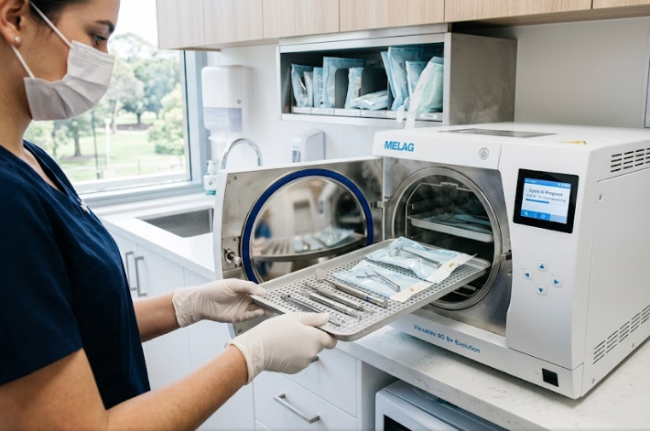
If you use an autoclave in a dental practice, medical clinic, veterinary facility, laboratory, or other healthcare setting, you may wonder: how long does autoclave sterilisation take? In general, an autoclave cycle can take anywhere from around 30 minutes to more than an hour, depending on the autoclave model, sterilisation cycle, load size, instrument type,…
Dental Autoclaves: A Complete Guide for Dental Practices

Sterilisation is one of the most important parts of running a safe and professional dental practice. Every day, dental instruments come into contact with patients, blood, saliva and other biological materials, making effective instrument reprocessing essential. A reliable dental autoclave helps eliminate microorganisms from reusable instruments using high-temperature steam under pressure. However, choosing the right…

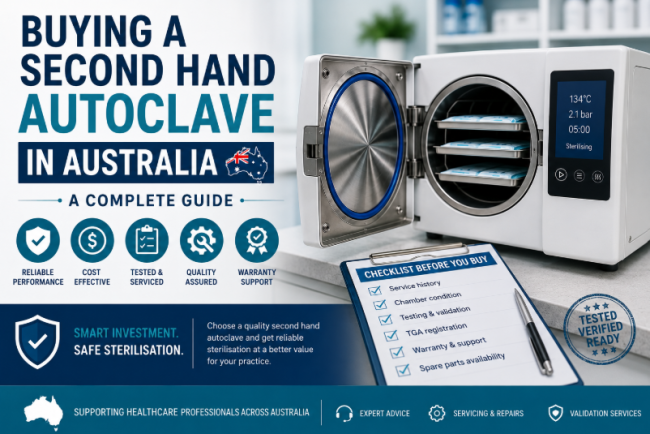
Buying a Second Hand Autoclave in Australia: A Complete Guide

Buying a second hand autoclave can be a practical way for a dental practice, medical clinic, veterinary facility, laboratory, or other healthcare business to access reliable sterilisation equipment without the cost of purchasing a brand-new machine. However, not every used autoclave is the same. The machine’s age, service history, condition, previous use, available spare parts,…

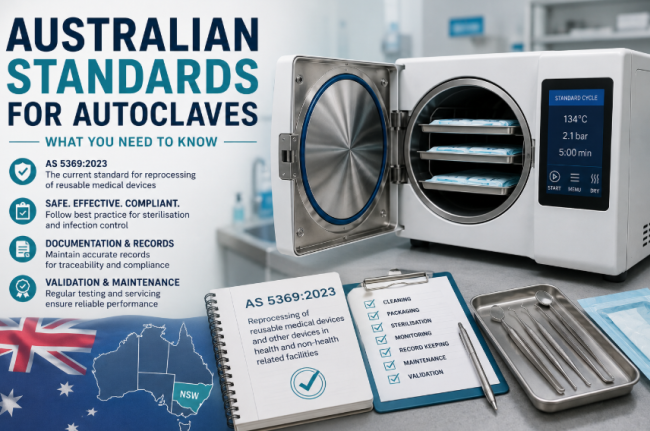
What Are the Australian Standards for Autoclaves?

If you operate a medical practice, dental clinic, laboratory, veterinary facility, or other setting that uses reusable instruments, understanding the Australian standards for autoclaves is essential. Proper sterilisation is not simply about owning a reliable autoclave machine. The equipment, reprocessing procedures, maintenance, documentation, staff training, and validation all need to work together to achieve safe…

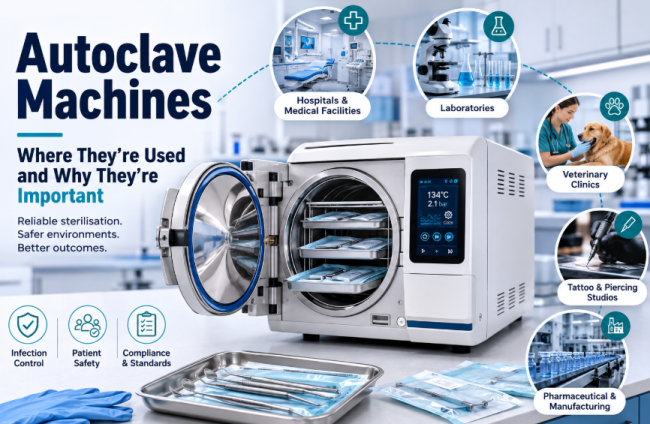
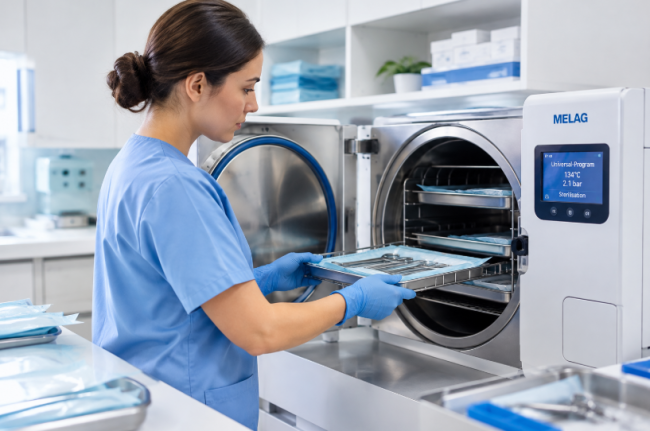
Autoclave Machines: Where They’re Used and Why They’re Important

Autoclave machines play an essential role in infection control across healthcare, dental practices, laboratories, veterinary clinics, and other professional environments where instruments and equipment need to be properly sterilised. By using high-temperature steam under pressure, an autoclave can destroy microorganisms that may remain on instruments after cleaning. This makes steam sterilisation an important part of…

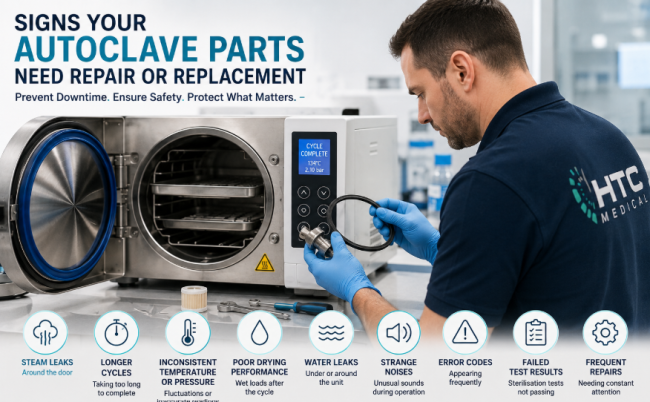
Signs Your Autoclave Parts Need Repair or Replacement

Medical autoclaves are among the most important pieces of equipment in healthcare, dental, veterinary, laboratory, and research facilities. They work tirelessly to eliminate harmful microorganisms and ensure instruments are safe for reuse. However, like any machine that operates under high temperatures and pressure, autoclave components naturally wear over time. Ignoring early warning signs can lead…

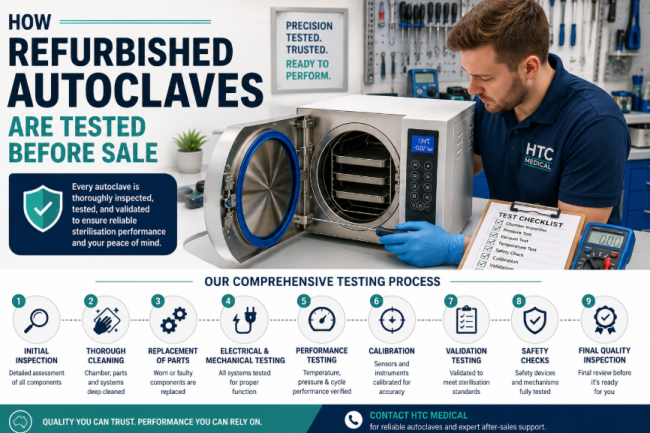
How Refurbished Autoclaves Are Tested Before Sale

Buying a refurbished autoclave is an excellent way to access reliable sterilisation equipment without the higher cost of purchasing a brand-new unit. For many dental practices, medical clinics, veterinary hospitals, laboratories, and healthcare facilities, a professionally refurbished autoclave offers the ideal balance of performance, quality, and value. However, not all refurbished autoclaves are restored to…

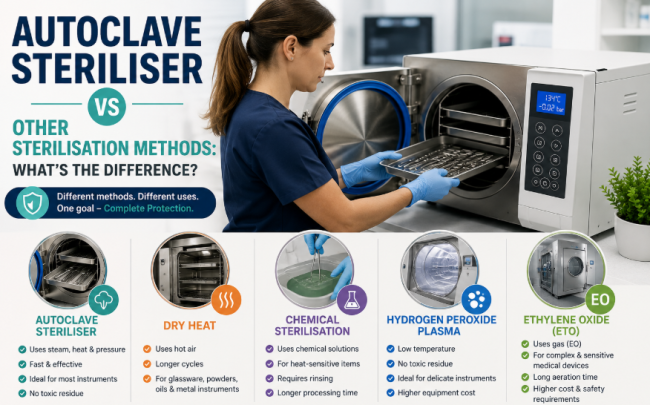
Autoclave Steriliser vs Other Sterilisation Methods: What’s the Difference?

Sterilisation is a vital part of infection prevention across healthcare, dental, veterinary, laboratory, and research environments. With several sterilisation methods available, choosing the right one can have a significant impact on patient safety, equipment longevity, and regulatory compliance. Among all available options, the autoclave steriliser remains the most widely used and trusted solution for reusable…